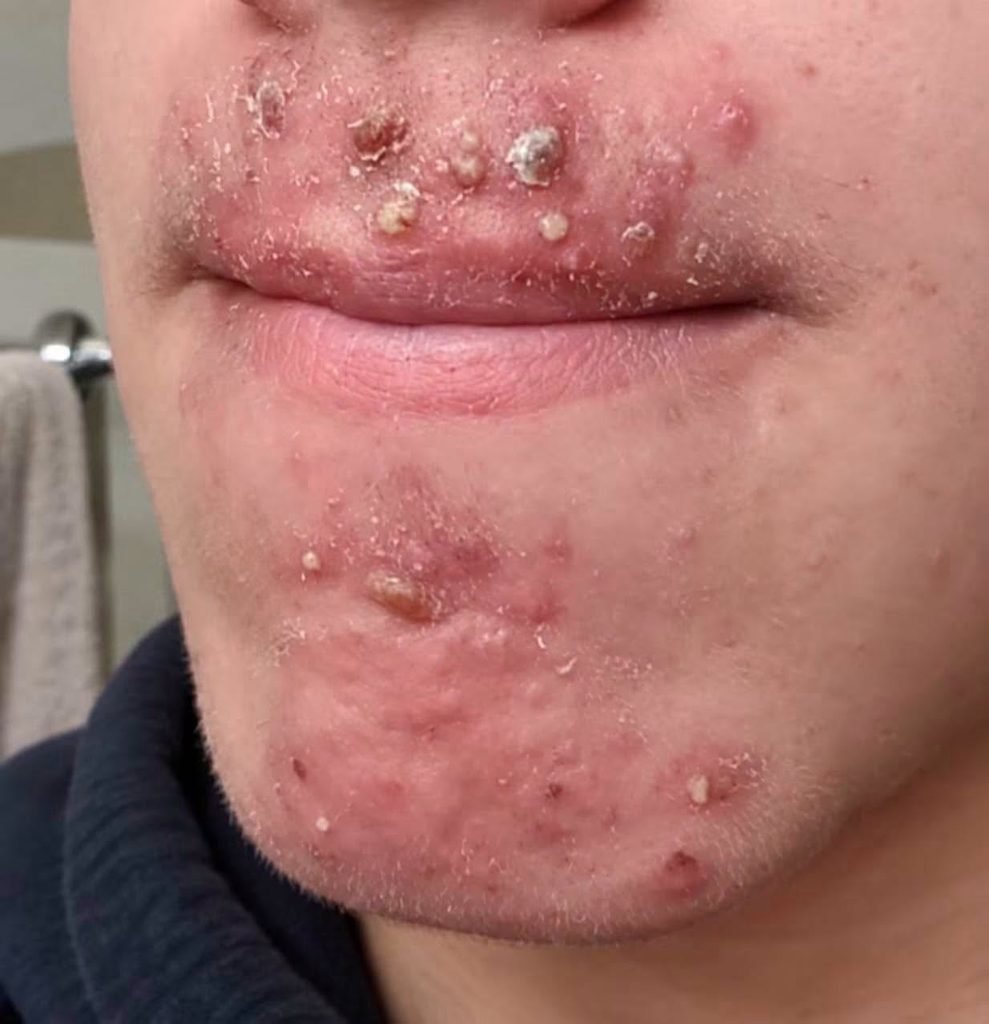
Been Seeing This Woman I Met at Walmart—Then I Woke Up With These Marks on My Face. What Could They Be?
Unexpected marks on your face can be alarming, especially when they appear overnight after spending time with someone new. What might initially seem like a strange or embarrassing situation can leave you wondering whether the marks are harmless, caused by skin irritation, or a sign of something that needs medical attention.
Although the story may sound like a viral internet mystery, there are several possible explanations for facial marks that appear after close physical contact. The key is to look at the appearance of the marks, how quickly they developed, and whether they cause itching, burning, or pain.
1. Contact Dermatitis: Could Your Skin Be Reacting to Something?
One possible explanation is contact dermatitis, a skin reaction that occurs when the skin comes into contact with an irritating substance or an allergen.
Perfumes, lotions, makeup, shaving products, detergents, and other personal-care products can trigger a reaction in susceptible people. Close physical contact may expose the face to a product that was not previously part of your routine.
Symptoms may include itching, discoloration, swelling, dry patches, or small blisters. Depending on the trigger, the reaction can appear within minutes or develop over the following hours or days.
If you suspect irritation, gently wash your face with lukewarm water and avoid newly introduced or fragranced products until the skin settles. A cool, damp cloth may provide relief.
Contact dermatitis is not contagious, but persistent or severe symptoms should be evaluated by a healthcare professional.
2. Hives: When the Skin Develops Raised Bumps
Hives are raised, itchy patches or bumps that can appear suddenly. They may vary in size, change shape, or disappear from one area while appearing in another.
Possible triggers include certain foods, medications, infections, pressure on the skin, and exposure to substances that cause an allergic reaction.
If the marks are raised and intensely itchy, hives may be one possibility. However, their appearance alone cannot establish the cause.
Seek emergency medical help if a sudden rash occurs alongside swelling of the lips, tongue, or throat, or difficulty breathing. These may be signs of a serious allergic reaction.
3. Friction or Pressure Marks
Sometimes, facial marks result from ordinary physical contact, rubbing, or pressure during sleep.
Friction can leave temporary redness or irritated patches. More forceful pressure or suction may cause bruising, which can appear reddish, purple, brown, or darker than the surrounding skin.
The timing and appearance of the marks can provide useful clues, but it is not possible to determine exactly what happened from the marks alone.
Avoid rubbing or scrubbing the affected area. If a bruise is suspected, a cool compress wrapped in a clean cloth may help with discomfort.
4. Could It Be a Skin Infection?
Not every new facial mark is an allergy or a temporary irritation. Some infections can also cause bumps, blisters, sores, or crusted areas.
For example, herpes simplex can cause clusters of painful or tingling blisters, often around the lips. Impetigo may produce sores that develop characteristic honey-colored crusts.
Certain infections can spread through close contact, but the appearance of a rash does not prove that it was sexually transmitted or acquired from a particular person.
If you notice painful blisters, open sores, spreading redness, pus, fever, or rapidly worsening symptoms, seek medical evaluation. Avoid picking at the lesions or sharing items that directly contact the affected area.
5. What Should You Do When You Wake Up With Facial Marks?
The safest first step is to examine the marks without assuming what caused them.
Clean gently: Wash the affected skin with lukewarm water and a mild cleanser.
Avoid irritants: Temporarily stop using new skincare products, fragrances, or harsh exfoliants.
Use a cool compress: Apply a clean, cool, damp cloth to soothe mild itching or irritation.
Do not pop blisters: Breaking the skin can increase the risk of infection.
Monitor the changes: Take a photograph in good lighting so you can see whether the marks are improving or spreading.
Seek professional advice: Get medical care if the rash is painful, persistent, spreading, blistering, or affecting the eyes.
Do not apply strong steroid creams, alcohol, or other harsh substances to unexplained facial lesions without appropriate medical advice.
6. When Should You Be Concerned?
Most minor skin irritations improve with simple care, but some symptoms require prompt attention.
Seek emergency care for breathing difficulties or swelling of the tongue or throat. Obtain urgent medical advice for rapidly spreading redness, severe pain, fever, pus, or blisters near the eyes.
If you develop new genital symptoms, painful sores, or other concerns after sexual contact, a healthcare professional can assess whether testing for sexually transmitted infections is appropriate.
Remember that a rash cannot reliably establish whether someone has an infection, how it was acquired, or who transmitted it.
Final Thoughts
Waking up with unexpected marks on your face can be unsettling, but there is no single explanation that fits every case. Contact dermatitis, hives, friction, bruising, and certain skin infections can all produce different types of facial changes.
Rather than jumping to conclusions, pay attention to the symptoms, avoid irritating the skin, and seek medical advice when warning signs appear.
The most important clue is not simply when the marks appeared, but what they look like and how they change over time.
Medical disclaimer: This article is for educational purposes only. It cannot diagnose a skin condition, and it should not replace an examination by a qualified healthcare professional.